A guide for homeowners building in Goochland, Richmond, and the surrounding areas
Building a custom home is one of the biggest investments you’ll ever make, so when you drive by your jobsite after a storm and see soaking wet framing, it’s natural to assume something has gone wrong. In most cases, it hasn’t. Here’s what’s actually happening inside that lumber, and what a good builder does about it.
You Just Watched It Rain on Your Future Home
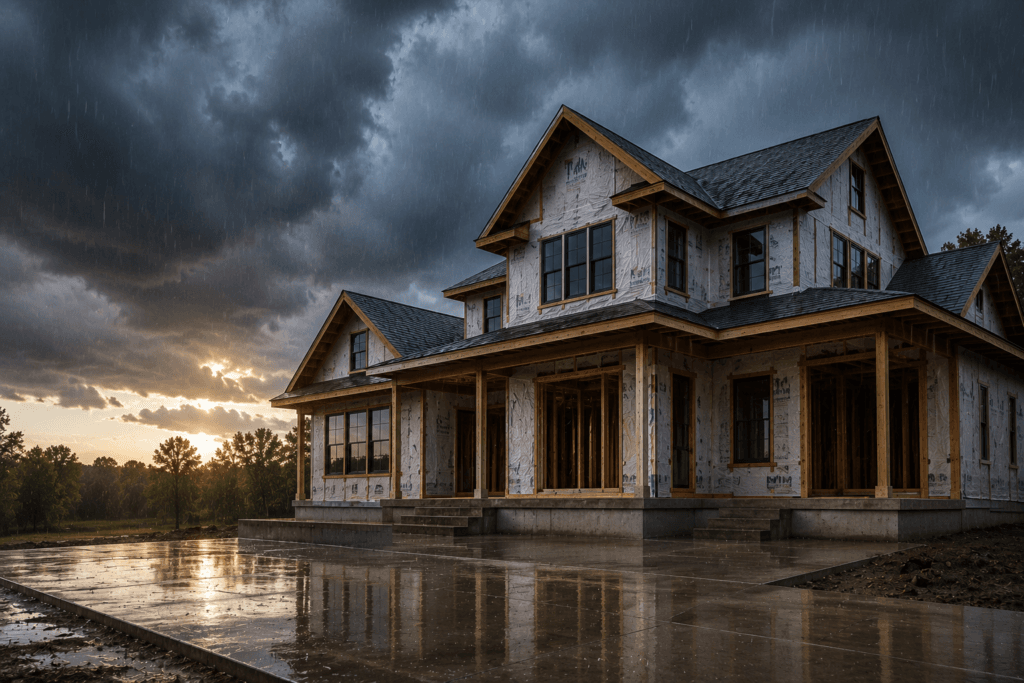
You’ve been checking on your home every chance you get. One afternoon a thunderstorm rolls through, and the next day you stop by the jobsite to find the roof still open, the floors wet, and water pooled in the corners of what will eventually be your living room.
Your excitement turns into a knot in your stomach. Is the house ruined? Will this cause mold down the road?
Nearly every custom home client asks some version of that question, and the answer starts with an uncomfortable truth about construction: your home is going to get rained on. Homes are framed outdoors. Before the roof and exterior are complete, the structure will see rain, humidity, morning dew, and sometimes snow. Framing lumber is designed to handle that kind of temporary exposure.
The real risk shows up later, if lumber gets sealed behind insulation and drywall while it’s still wet. Trapped moisture is what creates problems. Rain that’s allowed to dry out properly almost never does.
So the question worth asking about your builder is a simple one: what do they do after the rain stops?
Two Builders, Two Very Different Outcomes
Picture two builders, both hit with three days of heavy rain.
The first builder is watching the schedule. As soon as the weather clears, the crews push forward. Insulation goes in, drywall follows, and the house keeps moving. Whatever moisture was in that framing is now sealed inside the walls.
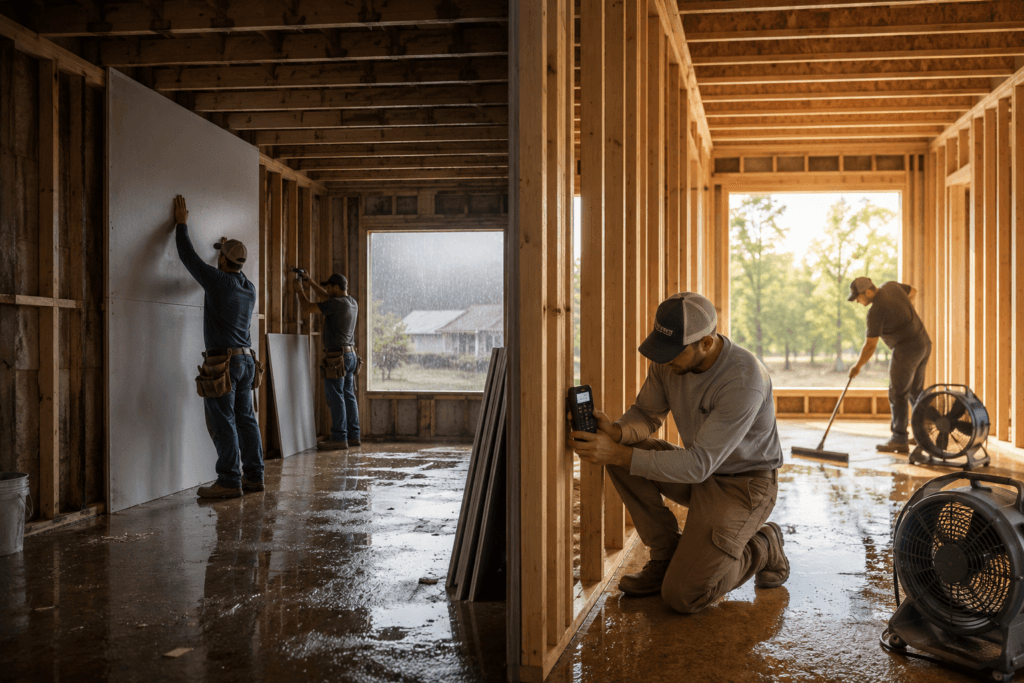
The second builder pauses. Before anything gets covered, they walk the framing, pull standing water off the floors, and get air moving through the structure. They check moisture levels with a meter. If they find surface mold, they clean and treat it. If a board has warped or degraded beyond acceptable limits, it comes out and gets replaced.
The homeowner may never notice those extra steps, but they’ll benefit from them every day they own the home. Building with discipline protects your investment for decades. Building fast just protects the calendar.
What Actually Happens When Framing Lumber Gets Wet?
Temporary exposure to rain rarely affects the structural integrity of properly graded framing lumber. That surprises a lot of people, but it’s the reason houses can be framed in the open air at all.
Moisture that sits trapped for extended periods is a different story. Over time it can lead to surface mold, minor swelling, and twisting or warping as the lumber dries unevenly. It can also delay the schedule, since insulation and drywall shouldn’t go in until moisture levels come down.
Every one of those problems traces back to moisture management rather than to the rain itself. Water on the framing is a normal Tuesday in construction. Water sealed inside a finished wall is a mistake.
What Should You Expect From Your Builder?
A professional builder should have a clear process for handling wet framing, and they should be able to explain it to you without getting defensive.
At McMahon Custom Homes, protecting your investment starts long before drywall goes up. After significant weather, we inspect the structure and take the time necessary to make sure it’s ready for the next phase. Depending on conditions, that process may include:
- Allowing the framing to dry naturally with proper airflow
- Removing standing water from floors and low areas
- Inspecting for surface mold, and cleaning and treating affected areas when necessary
- Replacing framing materials that no longer meet our standards
- Confirming moisture levels with a meter before insulation is installed
We consider all of this part of building a home the right way, on the same level as pouring a proper foundation.
Should Lumber Be Covered With Plastic?
Not always, and this is where a lot of well-meaning advice goes sideways.
Plastic does a good job protecting dry lumber that’s waiting to be installed. Wrapping wet lumber tightly in plastic, though, traps moisture against the wood instead of letting it escape, which creates exactly the conditions mold needs to grow.
The better approach: store lumber off the ground, let air circulate around it, cover it during extended storage when it makes sense, and pull the coverings off after rain so the wood can dry naturally. With lumber, restraint is often the more skilled move.
Five Questions Every Homeowner Should Ask Their Builder
If your home has been through heavy rain, ask questions. A quality builder should welcome the conversation.
- How do you know the framing is dry enough to continue?
- Do you use a moisture meter before insulation?
- What happens if surface mold develops?
- How do you determine whether framing should be replaced?
- What steps do you take after significant rain events?
The answers will tell you a great deal about your builder’s process and how seriously they take the parts of your home you’ll never see again.
Peace of Mind Comes From Process
Most homeowners will never lay eyes on their framing again after drywall goes up, which is exactly why those early stages matter so much. You deserve confidence in everything hidden behind the walls, not just the finishes you can see.
Our responsibility at McMahon Custom Homes goes beyond building a beautiful home. We’re protecting your investment at every stage, even on the days you can’t be standing on the jobsite. That’s what it means to guide families from Land to Keys®.
Frequently Asked Questions
Can framing lumber get wet? Yes. Properly graded framing lumber is designed to handle exposure to rain, humidity, and dew during construction. The lumber just needs to dry to appropriate moisture levels before the walls are enclosed.
Is it normal for a house under construction to get rained on? Yes. Nearly every home under construction is exposed to weather before the roof and exterior are complete.
Does rain ruin framing lumber? No. Exposure to rain is expected. Problems occur when moisture gets trapped inside the home before it can dry.
Is mold in new construction normal? Finding surface mold on framing during construction is common, especially after wet weather, and it’s usually treatable. What matters is that your builder inspects for it and addresses it before the home is enclosed. Mold in new construction becomes a real problem only when it’s ignored or covered up.
Does mold on framing mean my home is ruined? No. Surface mold is usually treatable and doesn’t indicate structural damage. The important step is addressing it before insulation and drywall go in.
How long should framing dry before insulation? There’s no universal timeline. Drying depends on temperature, humidity, airflow, and how much moisture the structure took on. Professional builders verify conditions with a moisture meter before enclosing the walls.
Will warped boards be replaced? Minor movement is common as lumber dries. If a board no longer meets structural or quality standards, it should be replaced.
Your Home Is Too Important to Leave to Chance
Rain during construction is inevitable. A builder’s response to it is a choice.
Anyone can frame a house. The builders who earn your trust are the ones willing to slow down when conditions call for it, and who refuse to hide problems behind drywall. If you’re planning to build a custom home in Goochland, Richmond, or the surrounding areas, ask more than what your home will look like. Ask how your builder protects it before you ever receive the keys.
At McMahon Custom Homes, we guide you through every step of the journey, from Land to Keys®, with transparency, craftsmanship, and the same care we’d put into building our own home. That’s the kind of confidence every homeowner deserves.