
CENTRAL VIRGINIA · BUYING LAND
By Josh McMahon of McMahon Custom Homes
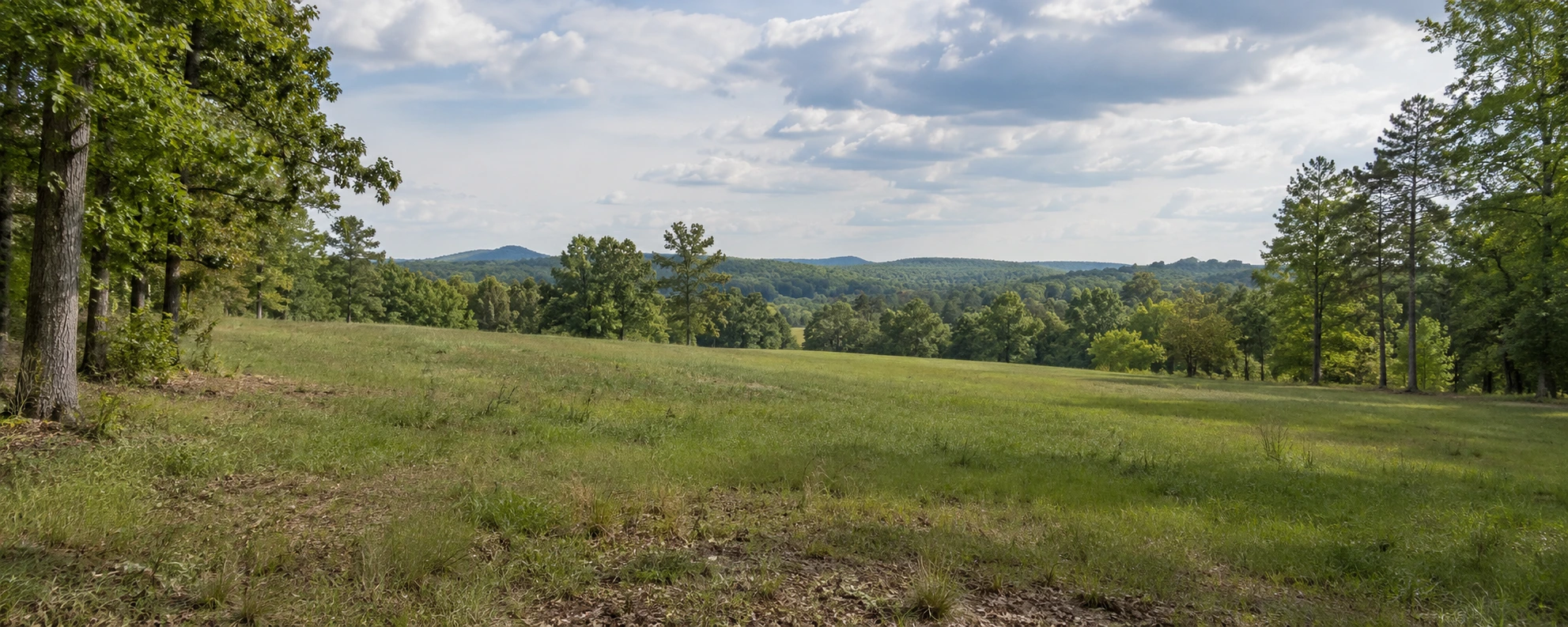
You bought the wrong land. Now you can’t build the house you really want. This guide will help you avoid that mistake.
In this guide, you’ll find:
You’re standing on the lot, excited and a little nervous. Should you make an offer? You can picture the house and the view from the porch. But will the land work for that home? How much will it cost to add a driveway, water, and power?
Find out after you buy, and that work could use up money meant for the house. Restrictions could rule out features you want. Get answers while you still have a choice about which land to buy.
This guide explains what to check, who can help, and which costs to compare. Use the printable sheets to track what you know and what you still need to find out.
Four sheets with room for notes, costs, and questions. Print a set for each lot.
Think about the house before you choose the land. A wide, one-story home may need more space on the ground than a two-story home. A basement with a door to the yard depends on the slope of the land. A workshop or pool needs room, too.
Write down the rough size of your home, how many bedrooms you need, and your must-have features. Note which things you could change. This helps your builder see if a lot could work.
Visit the area. Check the drive to work, school, or other places you go often. Notice nearby roads, farms, and businesses. Think about how they might affect life at your new home.
Get permission before walking on private land or having tests done.
Ask for the parcel ID. This is the number the county uses to identify the land. Match it with the land listed for sale. Ask for the legal description, which is the written record of what land is being sold.
Get any survey or plat the seller has. These are maps of the land. A listing map can help you find a lot, but you need a surveyor to check its exact edges. A surveyor measures land and marks property lines. Ask if you need a new survey.
Have a title company or lawyer check the land records. Ask about rules that could limit what you build. Also ask about easements. These give someone rights to use part of the land, such as a path for power lines or a shared drive.
If you would use a shared drive or private road, ask who can use it. Who pays to fix it? Have your title company or lawyer check that you have the legal right to use the route to your home.
Ask the county planning or zoning office about your house plans. This office can explain what you can build and how far the house must sit from property lines. If there is a homeowners association, or HOA, check its rules, too. There may be rules about the size or look of the home, building materials, and sheds or workshops.
Check future plans before you buy. Want to split the land or build another home? Ask the county about each plan. In Goochland, splitting land to create new home lots needs county review and approval. Goochland’s guide to dividing land explains the steps. Ask Planning & Zoning to review your land and plans.
Ask how water will reach the house and where used water will go. Can the house connect to public water or sewer lines? Ask the provider to check the lot and house location. Find out where the lines would connect, what the work would cost, and how long it would take.
Lines near the land do not mean your home can connect.
Some homes need a well for water and a septic system to handle water from toilets, sinks, and showers. If yours would, ask the seller for any soil test reports, letters, permits, and plans. Take them to the local health department. Ask which soil or septic expert you need to help you check them.
Make sure the septic records match the home you want. Can the system serve the number of bedrooms you need? What tests or permits do you still need?
Ask where the drainfield would go. This is the area where water from the septic tank flows into the soil. Also ask about any reserve area, which is space kept for a future drainfield. These areas need room alongside the well, house, driveway, and any future pool or workshop.
If a listing says the land “percs,” ask for the soil test records behind that claim. A soil report or letter saying the land is suited for septic is not a permit to build the system. Ask the health department what the records mean and what you must do next. Virginia’s well and septic program can help you find the right office.
The house needs space. So do the driveway, well, and septic areas. Power and water lines need a path to the house. Where these things go can change how much digging and ground work you need.
Goochland’s site-plan notes show what belongs on the same plan. Seeing it together helps you spot things that may not fit.
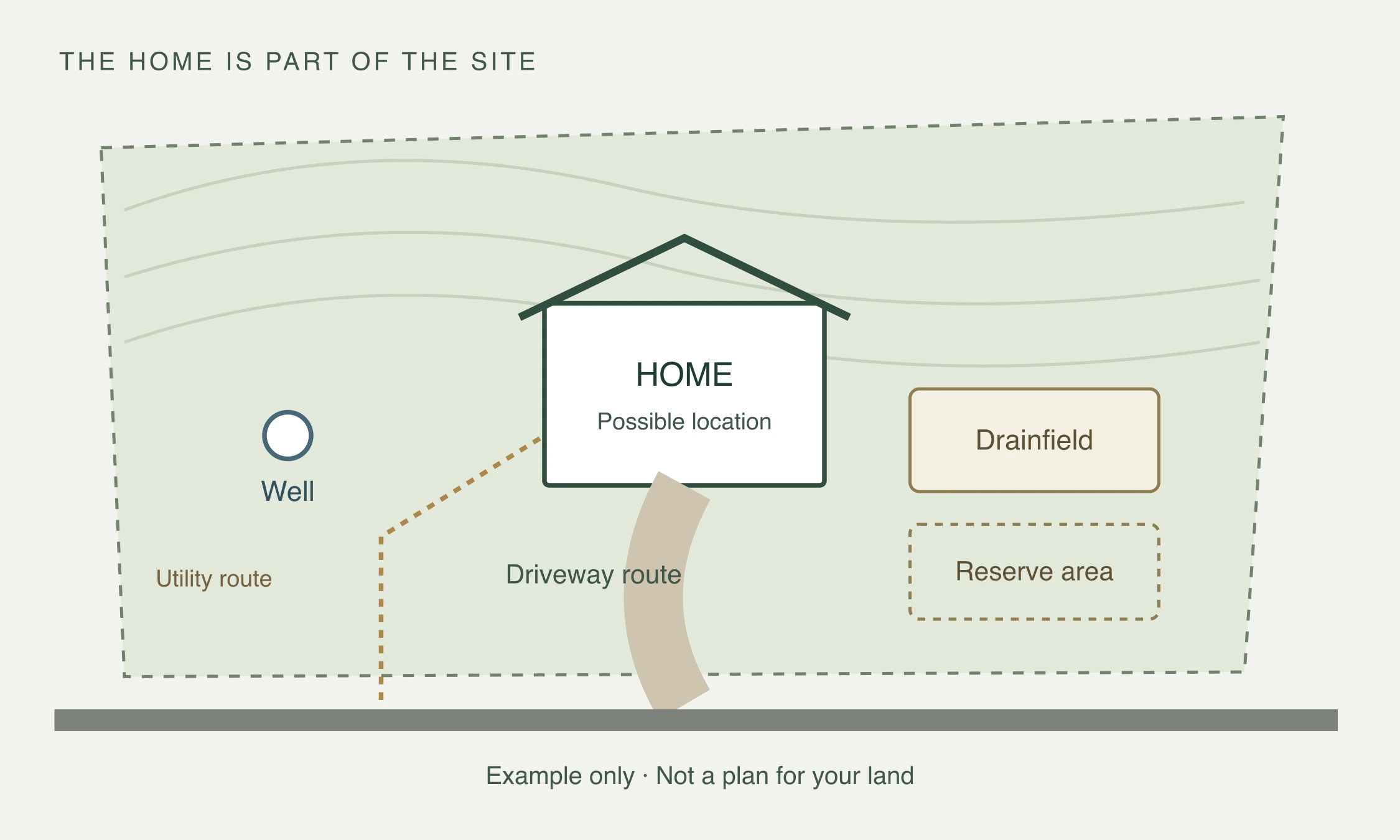
Conceptual illustration only. This is an example, not a plan for your land. It does not show required distances or county approval.
Walk the land with your builder. Talk about where the house and driveway could go. Look for steep slopes, low spots, soil washing away, and trees you want to keep. Ask what trees must be cleared and what digging may be needed. Will you need walls to hold back soil? Where will building trucks and equipment go?
Use the FEMA Flood Map Service Center to check flood maps. Have a site expert check how rainwater moves across the land, too. Streams, wet ground, and protected areas may need more checks. A dry day does not show you everything.
Your builder can help you find the right experts. A soil test for septic does not tell you how to build the house’s foundation. Ask what other tests or design work you need.
Land next to a road may still need a new entrance. Ask where you can put it and what approval you need. Look at how long and steep the driveway would be. Would it cross a ditch or stream? Could building trucks and fire trucks reach the house?
For a road cared for by the state, check entrance rules with the Virginia Department of Transportation, or VDOT.
Ask the power company what it would take to reach the house. Would it need more lines or equipment? Would it need rights to cross someone else’s land? Ask about cost and timing.
Check internet service at the house location, too. If you work from home, find out how you would get service before you buy.
Keep the providers’ answers with the parcel ID. Write down what work each price covers. “Utilities nearby” does not tell you what getting power, water, or internet to the house will cost.
Use the same list of costs for each lot. Include the land, fees to buy it, work to get it ready, and the house itself. Include design and loan costs. If you will own the land for a while before building, ask about costs during that time, too.
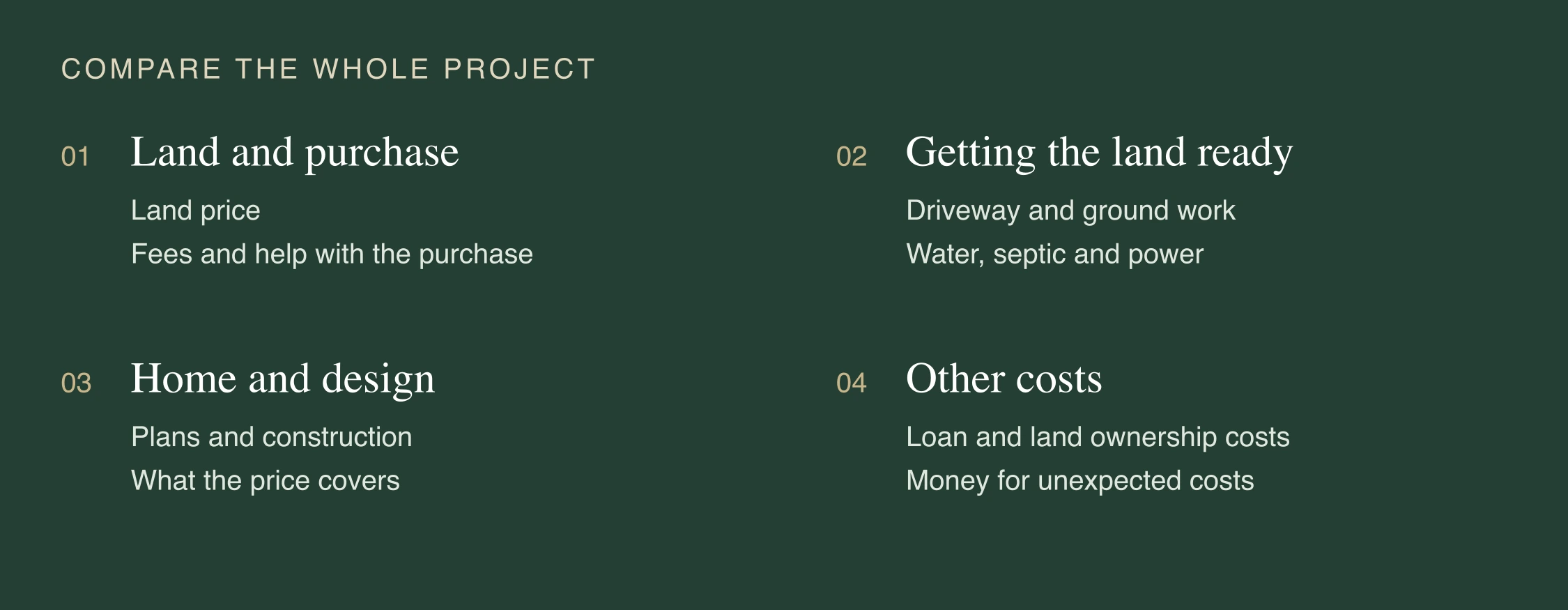
Work on the land may include tree clearing, digging, a driveway, and ways to move rainwater away. It may also include a well, septic system, or new power and water lines.
Ask what the builder’s first estimate covers. Some of these costs may already be in it. Don’t count them twice. For each estimate, write down who gave it, the date, and what it leaves out.
Write “unknown” for a cost you do not have yet. Don’t put zero. That can make a lot look cheaper than it is.
Ask your builder how to find the missing costs. Talk with your builder and lender about money to set aside for costs you don’t expect.
Look at what you still don’t know. Could an answer change your choice of land, your house plans, or your budget?
Write down who will answer each question and when you need the answer. Ask your real estate agent and lawyer about the terms and deadlines for buying the land. Make sure you can get permission and enough time for site visits and tests.
Before buying, go over the answers with the people helping you. Check what you can build, how you will reach the house, and how water and power will get to it. Review septic or sewer plans and the main costs to get the land ready. Ask what the reports and estimates still leave out.
A builder’s visit can help you spot questions. You may still need a survey, soil tests, engineering work, a legal check of land records, and permits or other approvals.
Use the sheets to keep your notes, costs, and open questions in one place. There are three choices for each review item:
Download the four-page land buying worksheets. Print only the pages you need. Keep a set for each lot.
McMahon Custom Homes helps buyers check land in Central Virginia before buying. Josh can look at where the house could go, how you would reach it, and the work it may take to build there.
Bring the listing or parcel ID, any records you have, and your questions. Learn more about our home site and lot evaluation. If you’re still looking, read about finding land for a custom home or building on your lot.