
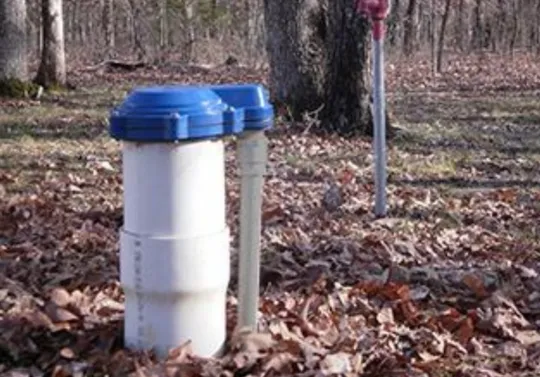
For many homeowners, one of the biggest advantages of building a custom home in rural Virginia is having your own private well.
A private well provides independence from public water systems, a reliable source of drinking water, and often lower long-term utility costs.
However, owning a well also comes with responsibilities.
If you’re planning to build a custom home in Goochland, Powhatan, Louisa, Hanover, Chesterfield, or other rural areas of Central Virginia, this guide explains what you should know before drilling a well, how the permitting process works, and how to protect your investment for years to come.
A private well draws groundwater from an underground aquifer and delivers it to your home through a well pump and pressure tank.
Unlike municipal water systems, private wells are owned and maintained by the homeowner.
That means you control your water supply, but you’re also responsible for maintaining the system and monitoring water quality.
Yes.
Before a private well can be drilled, a construction permit must be issued through your local health department in accordance with Virginia’s private well regulations. The process typically includes a sanitary survey to identify a safe location for the well, followed by permit approval before drilling begins.
For most custom home projects, your builder coordinates this process with qualified professionals such as an onsite soil evaluator and a licensed well driller.
Because drilling schedules often fill months in advance, it’s important to begin this process early in pre-construction.
The actual drilling may only take a day or two.
Scheduling the work is often the bigger challenge.
Depending on demand and your location, well drillers may be booked several months in advance.
Starting the permitting process early helps avoid delays later in construction.
When properly constructed and maintained, a private well can provide excellent drinking water.
New wells in Virginia must be disinfected and tested for coliform bacteria before they are approved for use. After that, the responsibility for monitoring water quality belongs to the homeowner.
Even if your water appears clean, regular testing is one of the best ways to protect your family’s health.
Water quality can change over time.
Virginia health officials recommend establishing a baseline water test and continuing to test for bacteria annually, as well as any time you notice a change in the water’s taste, odor, appearance, or after flooding or damage to the well. Additional testing for minerals and other contaminants may also be appropriate depending on your location.
A comprehensive water analysis can also identify nuisance issues such as:
Understanding your water quality early allows you to select the right treatment system if one is needed.
Not every home does, but many do.
One of the most common issues with private wells in Virginia is hard water.
Hard water isn’t necessarily unsafe to drink, but it can:
A professional water test will determine whether treatment equipment such as a water softener or filtration system is recommended.
While it’s an additional investment, it can help protect your plumbing system and improve your everyday water quality.
Like any major home system, your well benefits from routine maintenance.
Homeowners should:
Addressing small issues early often prevents more expensive repairs later.
Although groundwater is a renewable resource, using water responsibly helps protect your well system and the surrounding aquifer.
Simple ways to reduce water use include:
Small changes can reduce water use without sacrificing comfort.
If you’re purchasing property that already has a well, ask:
If the property does not yet have a well, ask your builder about the permitting process, expected drilling timeline, and potential site considerations before purchasing the land.
A private well is one of the most valuable systems in your home.
The earlier your builder begins coordinating permits, site evaluations, and drilling, the smoother your project is likely to be.
Good planning not only helps keep construction on schedule, but also gives you confidence that your water system is designed for long-term reliability.
At McMahon Custom Homes, we build many homes on private wells throughout Central Virginia. As part of our Land-to-Keys™ process, we coordinate with onsite soil evaluators, surveyors, licensed well drillers, and local health departments to help move your project forward as efficiently as possible.
If you’re planning to build on rural property in Goochland, Powhatan, Louisa, Hanover, Chesterfield, or the surrounding areas, we’d be happy to help you understand what to expect before drilling begins and guide you through every step of the process.
For additional information about private well permits, testing, and homeowner responsibilities, the Virginia Department of Health Private Well Program is an excellent resource.