
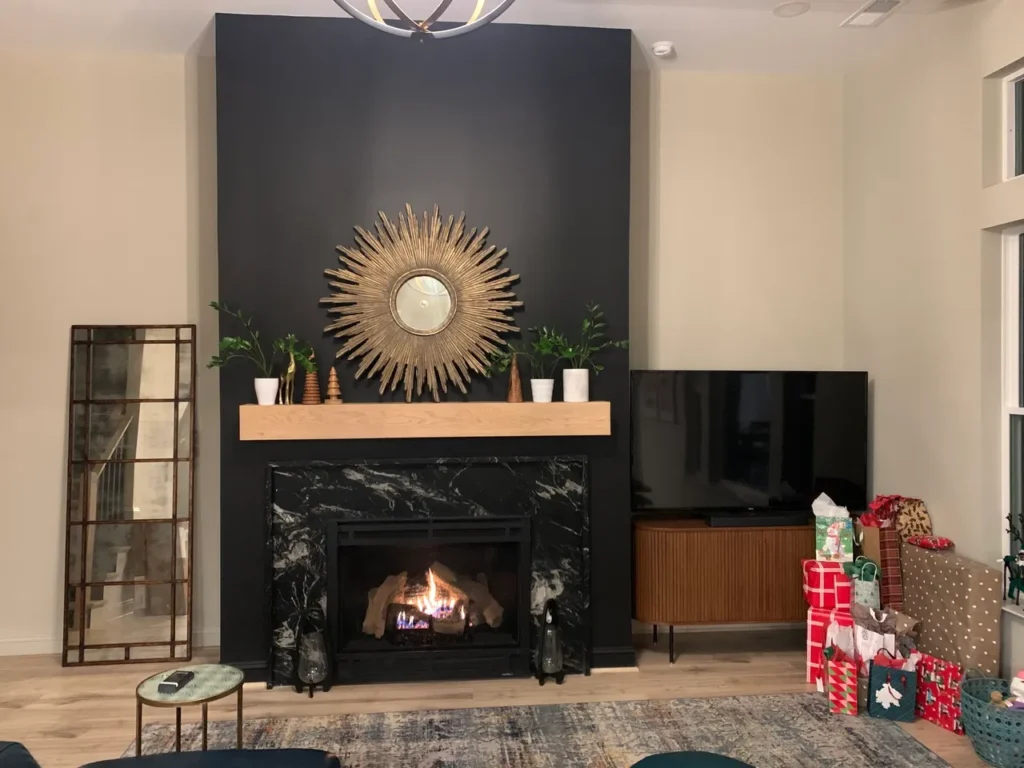
Few features make a house feel more like home than a fireplace.
Whether you’re gathering with family on a cold winter evening, enjoying a quiet morning with a cup of coffee, or celebrating the holidays, a fireplace often becomes the centerpiece of the home.
If you’re building a custom home, one of the questions you’ll eventually face is:
Should I choose a gas fireplace or a traditional wood-burning fireplace?
The answer depends on how you plan to use it.
This guide explains the differences, the advantages of each option, and what you should consider before making your decision.
Most custom homes today include one of three types of fireplaces:
Direct vent gas fireplaces
Traditional wood-burning fireplaces
Electric fireplaces
Each has advantages depending on your lifestyle, maintenance preferences, and heating goals.
Gas fireplaces have become the most common choice in new construction because they offer convenience, efficiency, and attractive design options.
With the push toward energy-efficient homes and busy lifestyles, many homeowners want the appearance and comfort of a fireplace without the maintenance of burning wood.
Modern gas fireplaces can closely resemble traditional wood-burning fireplaces while providing instant heat with the push of a button.
Yes.
Many homeowners assume gas fireplaces are decorative, but many models produce enough heat to comfortably warm large living spaces.
Depending on the model you choose, a gas fireplace may:
Supplement your home’s heating system
Heat a large family room
Warm an open-concept living area
Continue operating during certain power outages, depending on the fireplace design
If heating performance is important, ask your builder about the fireplace’s BTU rating and heating capacity.
Gas fireplaces offer several benefits that make them popular in custom homes.
These include:
Instant ignition
Easy operation
Low maintenance
Consistent performance
Realistic flame appearance
Wide variety of styles
No need to store firewood
No ash cleanup after every use
Many homeowners enjoy the ambiance of a fire without the work required to maintain a traditional wood-burning fireplace.
For some homeowners, nothing replaces the experience of burning real wood.
Wood-burning fireplaces provide:
The authentic smell and sound of a wood fire
Traditional crackling flames
A timeless appearance
A classic holiday atmosphere
If enjoying the complete wood-burning experience is important to you, a traditional fireplace may still be the right choice.
Keep in mind that wood-burning fireplaces require more maintenance and regular chimney inspections.
One of the biggest differences between fireplace types is maintenance.
A gas fireplace typically requires:
Annual inspection
Cleaning of the glass and components
Routine servicing by a qualified technician
A wood-burning fireplace requires:
Annual chimney inspection
Chimney cleaning to remove creosote
Ash removal
Firewood storage
Ongoing monitoring of the chimney and flue
Neither option is maintenance free, but gas fireplaces generally require less homeowner involvement.
Absolutely.
Modern direct vent fireplaces offer an impressive range of design options.
Homeowners can choose from:
Traditional log sets
Contemporary linear fireplaces
Stone, tile, or brick surrounds
Wood mantels
Floating hearths
Floor-to-ceiling fireplace walls
Many guests cannot immediately tell whether a modern fireplace burns gas or wood.
The design possibilities are far greater than many people realize.
The right fireplace depends on how you plan to use it.
Choose a gas fireplace if you want:
Convenience
Low maintenance
Reliable supplemental heat
Simple operation
Modern design flexibility
Choose a wood-burning fireplace if you value:
Authentic flames
The smell and sound of burning wood
Traditional fireplace experiences
A more rustic atmosphere
There is no wrong answer. It comes down to how you want your home to feel and how much maintenance you’re comfortable with over the years.
When we built our own home, we selected a direct vent gas fireplace because we wanted the warmth and atmosphere of a fire without the ongoing maintenance of burning wood.
For our family, it provided the right balance of comfort, efficiency, and everyday convenience.
Your priorities may be different, which is exactly why these conversations are so important during the design process.
Choosing a fireplace isn’t just about heat.
It’s about creating a space where your family gathers, celebrates holidays, and builds memories for years to come.
At McMahon Custom Homes, we help homeowners compare the advantages of every major decision before construction begins. During our Land-to-Keys™ process, we’ll discuss your lifestyle, heating goals, maintenance preferences, and design vision so you can choose the fireplace that best fits your home.
If you’re planning to build a custom home in Goochland, Richmond, Chesterfield, Midlothian, Henrico, Hanover, Powhatan, or the surrounding areas, we’d be happy to help you compare your fireplace options before making a final decision.
If you’re wondering how Santa gets into a home with a modern direct vent fireplace, you’re not alone.
We once asked that very question to a fireplace expert.
His answer?
“Through Christmas magic, every fireplace opens wide to welcome Santa and holiday cheer.”
We’re inclined to believe him.