Most energy-efficient home design advice is written by people who have never built a house. The result is a long list of “green” upgrades, half of which barely move the needle in Virginia’s climate and a few of which are genuinely worth the money.
After 15 years of building custom homes across Goochland, Hanover, Chesterfield, Powhatan, and Richmond, I’ve seen what actually shows up on a utility bill and what doesn’t. These nine decisions do.
Quick Summary
The nine design choices below carry the most weight in a Central Virginia home:
- Right-size the HVAC system at the design stage.
- Install a smart thermostat.
- Choose a tankless water heater if your household actually fits the use profile.
- Spec airtight, low-E windows and weather-stripped doors.
- Switch every fixture to LED.
- Orient windows to work with the sun, not against it.
- Specify ENERGY STAR appliances during design, not after move-in.
- Use current federal tax credits and Virginia rebates before they expire.
- Insulate the attic, crawl space, exterior walls, and shared garage walls.
Why energy efficiency matters in Virginia
The average American household spends about $2,000 a year on energy, and $200 to $400 of that gets wasted through air leaks, drafts, and tired HVAC equipment. In a humid subtropical climate like ours, those losses run higher. Richmond summers push relative humidity into the high 70s for weeks at a stretch. Goochland and Powhatan winters drop below freezing for days at a time. A house that’s tight, properly insulated, and correctly equipped costs noticeably less to run, year after year.
Virginia is also pushing in the same direction. The Virginia Clean Economy Act sets long-term carbon-free electricity targets for the state’s major utilities, and Home Energy Rebates funded by the federal Inflation Reduction Act are rolling out at the state level. Program details shift, so verify current rebates with Virginia Energy before you build them into a budget.
9 design choices that pay back in Central Virginia
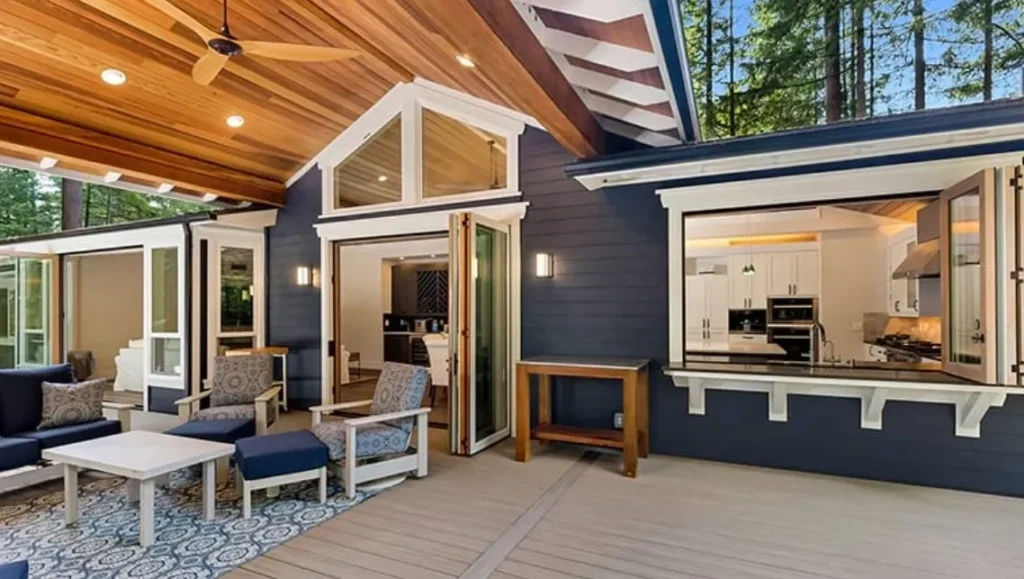
1. Right-size the HVAC system
Bigger isn’t better. An oversized HVAC system cools or heats the space fast, shuts off, and cycles back on a few minutes later. That short cycling burns out the compressor early and never runs long enough to pull humidity out of the air. In our climate, that’s the difference between a comfortable house and a clammy one.
The fix is a real load calculation at the design stage. Square footage alone doesn’t cut it. Window area, orientation, insulation values, and infiltration rates all change the answer. Get it right once and you save on equipment, energy, and replacement.
2. Install a smart thermostat
The cheapest meaningful upgrade in this list. Set a schedule, control it from your phone, and let the system idle when nobody’s home. For most Central Virginia households, the payback shows up in the first month’s bill.
3. Tankless water heater (only if your usage fits)
Tankless water heaters get oversold. They’re excellent in the right house and underwhelming in the wrong one.
Per the US Department of Energy, tankless units run 24% to 34% more efficient than a tank in homes using 41 gallons of hot water or less per day. In high-use households around 86 gallons per day, that drops to 8% to 14%. A two-person household with one bathroom is a great candidate. A family of five running simultaneous showers and a dishwasher is not. Know your usage before you write the check.
4. Airtight windows and doors
Gaps around windows and doors quietly run your HVAC bill up. Conditioned air leaks out, outdoor air leaks in, and the system runs harder to stay even.
Weatherstrip exterior doors at install. For windows, ENERGY STAR-certified double-pane units with low-E coatings outperform standard builder-grade glass by a wide margin. Triple-pane makes sense in specific cases, but for most Central Virginia homes, well-installed double-pane is the right call.
5. LED lighting everywhere
LEDs use about 75% less energy than incandescent bulbs and last up to 30 times longer. There’s no real argument against them anymore. Spec LED fixtures during the build so you’re not retrofitting later.
6. Window orientation that works with the sun
Free heating in winter, free shade in summer. South-facing glass with the right overhang depth catches the low winter sun and blocks the high summer sun. East and west exposures need more careful treatment because the sun hits at a shallow angle for hours.
This is the kind of decision that costs nothing extra when designed in and almost impossible to fix once the home is framed.
7. ENERGY STAR appliances, specified upfront
Every major appliance in a new build should be ENERGY STAR-certified. The ENERGY STAR product list covers HVAC, refrigerators, dishwashers, washers, dryers, and heat pump water heaters. The efficiency gains compound for the 10 to 20 year life of each appliance, and the per-unit price difference at purchase is usually marginal.
8. Tax credits and rebates, before they expire
Federal energy efficient home improvement tax credits are scheduled to sunset at the end of 2026. Virginia’s Home Energy Rebates program is rolling out in stages. Together, they can offset real money on heat pumps, insulation, smart thermostats, solar, and high-performance windows. The US Department of Energy’s incentives page is the cleanest starting point. Verify what’s currently available in Virginia before you finalize your plan.
9. Insulation in the places that matter
Insulation isn’t glamorous, and it pays back longer than almost anything else on this list. The attic does the most work, followed by crawl spaces, exterior walls, and any wall shared with a garage or other unconditioned space.
On our custom builds, we routinely spec 2×6 exterior walls instead of standard 2×4. The extra two inches of cavity depth lets us pack in more insulation, which lowers the heating and cooling load for the life of the home. It’s a framing decision that costs a small premium upfront and pays back every month.
Building or remodeling in Central Virginia?
Every one of these decisions is cheaper to make on the drawing board than after the slab is poured. If you’re planning a custom build or major renovation in Goochland, Hanover, Chesterfield, Powhatan, Richmond, or the surrounding area, McMahon Custom Homes designs and builds homes that perform the way Virginia’s climate demands. Call (804) 774-5217 or reach out through the site to start the conversation.
Frequently Asked Questions
How much can Virginia homeowners save with energy-efficient upgrades?
Most homeowners cut energy use 20% to 30% after sealing air leaks, adding insulation, and replacing aging HVAC and water heating equipment. HVAC and hot water are the two biggest line items in an average bill, so improvements there move the needle hardest.
Is solar worth it on a Virginia home?
For homeowners staying 10 years or longer, usually yes. Solar works best on a home that’s already tight and well-insulated, because lower demand means a smaller array and faster payback. Solar bolted onto a leaky house is fixing the wrong problem first.
Do energy-efficient homes actually sell for more?
Yes. Lower utility bills, better indoor air quality, and tighter construction all read as value to buyers. The premium varies by market, but in Central Virginia it shows up clearly on appraisals when efficiency upgrades are documented.
How long do these upgrades take to pay back?
LED lighting and smart thermostats pay back in the first year. Insulation and HVAC upgrades typically run three to seven years. Solar and major envelope work run longer but compound over the life of the home.
Insulation or new windows first?
Insulation, almost every time. It contributes more to total energy savings, costs less, and makes new windows perform better when you do get to them.