

Building a house with septic systems on rural Virginia lots costs $12,000 to $45,000 additional beyond standard construction expenses. Rural lots require septic systems, well water, and extended utility connections that considerably impact total project costs. House building contractors must factor these rural considerations into project budgets from the initial planning phase.
We at McMahon Custom Homes, LLC, help clients understand the complete cost picture for rural Virginia construction. Our septic system experience as house building contractors guides families through rural building decisions. Home building companies must factor septic, well, and utility costs into project budgets from the beginning.
Virginia requires septic permits through the Virginia Department of Health (VDH) before installation. House builders must coordinate soil evaluations with Authorized Onsite Soil Evaluators (AOSE) before construction begins. Septic permits cost $100 to $800, depending on local health department requirements.
What septic system size do you need for your rural Virginia home? Standard homes require 1,000-gallon septic tanks for three to four bedrooms. Larger homes need 250 additional gallons per bedroom beyond four bedrooms. Tank sizing directly affects total system costs.
Basic septic systems cost $8,000 to $15,000 installed on suitable rural Virginia lots. Alternative septic systems for challenging soil conditions cost $20,000 to $55,000. House building contractors must evaluate soil conditions before selecting appropriate septic system types.
Advanced treatment systems required for poor soil conditions can cost $15,000 to $55,000. These systems include aerobic treatment units and engineered mound systems. Home building companies work with septic professionals to design systems that meet Virginia Department of Health requirements.
Soil percolation testing determines septic system feasibility and costs $800 to $1,600 per evaluation. House builders require these tests before finalizing lot purchases or construction plans. Failed soil tests can require alternative septic systems that greatly increase costs.
VDH requires 18 inches of suitable soil beneath septic drain fields for standard septic tank effluent systems. Systems using secondary treated effluent need only 12 inches, though shallow-placed systems may operate with 12 inches when specific soil and design criteria are met. Seasonal water table fluctuations in Virginia can highly impact septic feasibility, often requiring engineered or alternative systems during wet conditions. House building contractors must evaluate seasonal variations during soil testing phases.
Mound systems for shallow soils or high water tables cost $20,000 to $50,000 installed. Sand filter systems for poor drainage conditions range $12,000 to $25,000. These alternative systems require specialized installation by licensed house builders with septic experience.
House building contractors managing challenging soil conditions must account for additional septic system costs. How much does it cost to build a house with alternative septic systems can add $10,000 to $20,000 beyond basic septic costs. McMahon Custom Homes evaluates soil conditions early to prevent budget surprises during construction.
Rural Virginia homes require private wells that cost $6,000 to $16,000, depending on depth and water quality. Home building companies coordinate water well drilling with construction timelines. Well permits cost $25 to $100 through local health departments.
Water testing costs $200 to $500 to verify quality and safety standards. Poor water quality may require filtration systems costing $2,000 to $8,000 additional. House building contractors must plan water system costs into total project budgets.
Well pump systems cost $1,500 to $3,500, including pressure tanks and controls. Electrical connections for well systems add $800 to $2,000 to construction costs. Professional installation protects water system warranties and maintains code compliance.
House builders coordinate well placement with septic system locations to meet Virginia setback requirements. Wells must maintain a 100-foot minimum distance from septic drain fields. Site planning prevents costly relocations during construction.
Rural electrical connections cost $5 to $25 per linear foot from existing power lines. How much does it cost to build a house with extended electrical service? Properties over 300 feet from power lines can add $3,000 to $15,000 in electrical connection costs.
Underground electrical installation costs more but provides better reliability. House building contractors evaluate electrical connection routes during site planning. Temporary construction power adds $500 to $1,500 during building phases.
Rural internet connections may require satellite or cellular solutions costing $100 to $300 monthly. Home building companies help clients understand communication options for remote properties. Some areas qualify for fiber internet installations through rural development programs.
Landline telephone service installation costs $200 to $800 for rural properties. Cable television may not be available, requiring satellite solutions. These ongoing costs affect rural home ownership budgets beyond construction expenses.
Goochland County rural construction averages $185-260 per square foot, including septic and well systems. Hanover County rural projects cost $180-255 per square foot. Powhatan County building expenses range $175-250 per square foot for complete rural installations.
House builders in rural Virginia counties face longer material delivery distances, increased costs. Local permit fees vary by county, affecting total project expenses. McMahon Custom Homes works throughout rural Richmond and surrounding counties with established supplier networks.
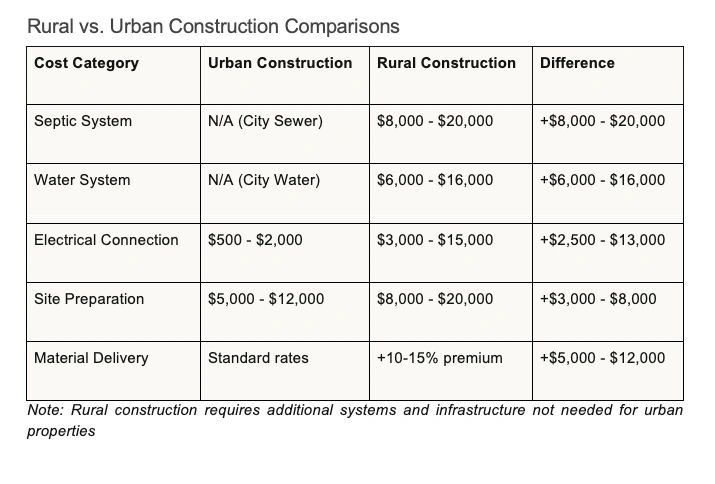
Rural properties offer larger lots and privacy but require significant infrastructure investments. Reliable house building contractors help clients understand these trade-offs during planning phases.
When a client purchased a 5-acre wooded lot in Goochland County, they faced the full challenge of rural development: septic installation, a private well, and extended electrical service. Soil testing revealed difficult clay conditions that ruled out a conventional septic system, requiring an engineered mound system instead. By leveraging our Pre-Construction Planning Agreement, McMahon Custom Homes coordinated every detail, transforming what could have been costly setbacks into a smooth, well-organized build, with no budget shocks or delays.
Septic systems require specific plumbing materials and installation methods. House builders use septic-safe fixtures and avoid garbage disposal installations. Lint traps on washing machine drains protect septic drain fields from synthetic materials.
Low-flow fixtures reduce septic system load and improve longevity. Home building companies specify appropriate fixtures during design phases. Water-efficient toilets, showerheads, and faucets benefit septic system performance.
Greywater systems can reduce septic loads and costs in some Virginia locations. These systems redirect sink and shower water for irrigation use. Local health departments regulate greywater systems, requiring permits and professional installation.
House building contractors evaluate greywater feasibility during design phases. Systems cost $2,000 to $8,000 but reduce septic system sizing requirements. Not all soil types or lot configurations support greywater installations.
Septic system permits require detailed site plans and soil evaluations. House builders submit applications, including tank sizing calculations and drain field layouts. Permit processing takes 2-4 weeks in most Virginia counties.
Construction permits cost additional fees beyond septic permits. Building permits for rural construction range $1,500 to $4,000, depending on home size. Home building companies coordinate multiple permit applications for efficient project scheduling.
Septic system installation requires multiple inspections during construction phases. Foundation inspection occurs before backfilling septic tanks. Final inspection verifies proper installation and system function before occupancy permits.
Failed inspections require corrections before proceeding with construction. House building contractors with septic experience avoid common installation problems. Professional installation reduces inspection delays and additional costs.
Virginia mandates septic tank pumping every 3-5 years at costs ranging $250 to $500 per service. The Department of Health imposes additional requirements for alternative septic systems, including mandatory annual maintenance contracts that cost $200 to $800 yearly. These contracts provide required inspections and ensure ongoing system compliance for operation permit renewals. House building contractors inform clients about these long-term maintenance obligations during project planning phases.
System repairs can cost $1,000 to $8,000, depending on problem severity. Drain field replacement represents the most expensive repair at $8,000 to $15,000. Proper installation by qualified house building contractors prevents premature system failures.
Well pumps typically last 8-15 years before replacement. Pump replacement costs $1,200 to $2,500, including labor. Annual water testing costs $150 to $300 to monitor quality changes.
Pressure tank replacement costs $300 to $800 every 5-10 years. Well casing problems require professional repair costing $500 to $3,000. At McMahon Custom Homes, we recommend quality installation to minimize future maintenance costs.
How much does it cost to build a house on rural lots? It depends significantly on site characteristics. Sloped lots may require engineered septic systems, increasing costs. Wooded lots add clearing expenses but provide natural drainage benefits.
Access road construction costs $5 to $15 per linear foot for gravel drives. Paved driveways cost $3 to $7 per square foot installed. House builders evaluate access requirements during initial site visits.
Rural home budgets should include 15-20% contingency funds for unforeseen site conditions. Soil conditions may require system modifications after initial planning. House building contractors recommend a thorough site evaluation before finalizing budgets.
Construction loans for rural properties may require higher down payments. Lenders evaluate septic and well systems during appraisal processes. Professional installation documentation supports loan approvals and property values.
Experienced house building contractors understand water well and septic system integration completely. Reliable local contractors maintain relationships with septic installers and well drillers, preventing scheduling delays and cost overruns. McMahon Custom Homes works with licensed septic professionals throughout rural Virginia counties. Our Pre-Construction Planning Agreement addresses septic and utility costs upfront, ensuring all rural infrastructure requirements are coordinated for streamlined project execution.
Clients consistently note McMahon Custom Homes’ professionalism and organization throughout the building process. As one of our esteemed clients, William Poh shared, “This was a great experience working with McMahon Custom Homes. They were very professional and well organized from start to finish.” He also praised their responsiveness, punctuality, quality, professionalism, and value; qualities that define their approach to every rural project.

Design-build firms manage septic system design integration with home plans. Site-specific challenges require flexible design approaches. Home building companies using design-build methods adapt quickly to rural site requirements.
Single-source responsibility simplifies rural project management. Coordination between septic, well, and construction teams prevents conflicts and delays. Professional project management maintains schedules despite rural infrastructure complexity.
Rural Virginia offers exceptional home building opportunities for families seeking privacy and natural settings. House builders must account for septic systems, well water, and utility connections that add $15,000 to $45,000 to construction costs. McMahon Custom Homes helps clients throughout Richmond and beyond navigate rural construction requirements with transparent planning and professional execution.
Contact McMahon Custom Homes in Maidens, VA, at (804) 774-5217 or joshua@mcmahoncustomhomesllc.com to discuss your rural Virginia home project and receive detailed cost estimates, including all septic and utility considerations.